Online Status.

It was a great pleasure to hone web skills and exchange feedback with fellow peers. When it comes to maintaining online identity, my initial thoughts simply went on to the distinction between a personal and professional profile. And that escalated to thinking that we possess rights to post anything on closed personal profile. Indeed.

However, the greater freedom of speech (through online platforms) may come with the tendency to act imprudently online. Having the freedom does not mean that we can use it to justify our actions that may be offensive and incur negative consequences over the Web. We need to be responsible – think before act.

Many organizations attempt to bring personal touch via online presence to connect with consumers. As we see abundance of information on virtual space, the higher bargaining power of consumers prompts organizations to deliver more. Organizations need to step up the game – it is more than marketing. Consumers want value. Same goes to individuals, what makes you think that a HR recruiter will notice you? Beyond showcasing achievements, I believe an individual needs to produce new ideas constantly online and connect with one another. When you give, you then receive.

In all, living and working on web probably akin to being your own brand manager. The emphasis here is to not to separate professional and personal profile for professional advantages, but rather portraying the BEST of an individual with content management. Using Powtoon, I hope to  share the basis of my digital profile planning with the 3Cs (refer to above video).


Screenshot 2015-11-20 22.42.17
My activities on LinkedIn

Placing learning forward, I created a LinkedIn account – a new community in my case. While connecting with my previous colleagues, I can also view highly customised articles (according to my interests) on my feed and share them. I am able to like and comment on posts by organizations. The refreshing idea of “crowdsourcing” based on professional interests helps me to better manage my information pool as it filters content that suits my professional needs.

Beyond that, my passion in visual creations may enhance my professional profile as it displayed creative traits that may be reflected in professional context.  The strategy was to post them on Instagram. Instagram users tend to use Instagram geotags for more information about the place. Since my visual creations revolves around the idea of location hunts and travel, I thought it will be more effective compared to my previous habits of posting them on Twitter. It provides enhanced value for a user who comes across my post (as he can see more relevant photos by clicking the geotag).

Screenshot 2015-11-20 23.06.07
@tedgraphy’s photo and @yishinnnnn’s (my) photoshop skills

A previous colleague of mine is also a visual enthusiast and thus we “collaborated”. Using her original photography work, I brought out a entirely different visual experience via editing software. The prologue of our collaboration helped her to gain exposure and allowed me to tap on her strength in photography. In the meanwhile, we are making plans of continuum of collaborations – to produce themed visuals.

As I explore various applications, I found about.me rather useful as a digital namecard which I display it on my different online platforms. Different accounts of mine (be it writing, works, connecting) are curated at a single glance. Audience may see me better as a whole individual rather than making judgements based on one profile.

Future Plans

The blog of mine currently records travel musings and visual experiences. The aim is to develop them into a variety of relevant Marketing content. The Powtoon video post may be a great start in using different online visual materials to illustrate Marketing strategies that may be much valued in the eyes of readers (and then to marketing professionals). I will also categorise the posts to customise to the needs of readers.

At present, I use tweets to hear opinions from others which I learnt how to  think critically based on opinions/information online (not taking everything as true). Meanwhile, I hope to connect with others (i.e. on Linkedin) in the similar manner by hearing from them more and share my thoughts.

The evolving needs (Topic 5)

Refreshing approaches I observed as I read posts of my different colleagues. Everyone can be a content producer – a musician, a journalist, a researcher or a film maker.

open-access

(The Island’s Computer Guys Ltd, 2015)

The internet possesses the ever unpredictable influence in terms of promoting content producer’s works and the sharing of information across the world. As Stephanie mentioned in her blog, Open Access Information (OAI) raises public awareness and acknowledgment of the author. Although some may mention that it is due to increase of tendency in individuals citing the works, I thought that a more applicable explanation is the accessibility that allows individuals to come across works of the author. Public information may not be cited if it is of a unacceptable quality. Closed access information may be viewed less because consumers are unsure about the quality of the content, especially if the author is relatively unknown.

A drawback that Stephanie observed was the violation of copyright as some may circulate the content content producers as theirs or illegally online. Demonstrating a different viewpoint, I thought that the concern will not cease even if the content producer limits the access of his content. Perhaps it is the nature of Internet that encourages the unethical circulation. Privacy issues still occur as we have seen music artists not uploading music to streaming sites but yet many try to share the music with others illegally. However as I read Sze Li‘s blog, I wonder if there could be more to why there was rising issues of copyrights violation. The motivation behind it can possibly be derived from the inequity of value received in terms of the price users pay.

Chris-Anderson's-Freemium

(Thorell, 2015)

The case of SkillShare utilises the “freemium” model whereby users can opt for free or premium membership. A premium membership comes with extra features that they may value (e.g. No advertisements, unlimited amount of access). This may possibly balance the needs of users (as they can choose accordingly) to maximise the interests of content producers. If this same concept is used in music industry (e.g. Spotify) that sees considerable success, do you think this will alleviate the problem in other industries? Less violation concerns are seen as users value the service of streaming any music with just a monthly subscription fee and they may grow into digital residents.

By making content freely online, we see benefits. However, by controlling the amount of free content and the price perception will then able to balance the advantages and disadvantages of making content freely online.

References

The Island’s Computer Guys Ltd, (2015). Open Access. [image] Available at: http://matiatiafyi.org.nz/home-page/open-access [Accessed 13 Nov. 2015].

Thorell, L. (2015). Freemium. [image] Available at: http://offthegrid-pr.com/socially-responsible-pr/2010/4/14/6-ways-for-online-business-directories-to-convert-more-freem.html [Accessed 13 Nov. 2015].

The question of cost,

As digitalization grows, more and more content producers are sharing their content online in the form of journalism, ebooks, video or audio. Consumers find access to these different information in the shared virtual space and some of it come as free.

content-marketing

(Miller, 2015)

Given the effortless access an individual can have over the web, a new content producer may build his reputation faster by posting free online content. The absence of gatekeeper (i.e. Cost) increases visibility of his work over a wider range of global audience, and may gain recognition through trusted reviews and word-of-mouth. Besides creating brand awareness, consumers may end up purchasing his other work (online or offline), relying on their previous experience with the content producer. It also serves as a testing ground in targeting new customer segments without incurring high expenditures.

content-marketing-pic-01

(WIX, 2015)

Making content freely online does not necessarily mean that a content producer allows his work to be viewed for free. Rather, it attracts consumers by providing value. For instance, a musician may upload a studio version of his music but consumers still have to purchase his original album (Letang, 2013). Perhaps it is similar to the rationale of “Content Marketing”; blogs, research or any form of content may generate more inbound traffic to the site, creating higher quality leads with customized content.

Simply more than the eyes for consumers, a content producer may want to build a community network through sharing and exchanging views. Among the designers, Dribble provides opportunities to showcase and even allow free downloading of work (only with permission of designers).

While some organizations use free online content as a marketing strategy, some rely on advertising revenue to provide free content for readers. Yet suffice to say, the “free for all” online culture may soon find its way to implementation of paywall in the coming years and may have an impact on value perception (Lepitak, 2015). Clearly, there are some disadvantages in using free online content as a business model. There is little inventory for advertisements and consumers may be able to block advertising messages in the digital environment, resulting in a unforeseeable revenue stream (Picard, 2015).

(The Guardian, 2015)

A reference to the newspaper industry highlighted the downfall of free information by content producers. The business model may prove to be unsustainable due to the ease access of Internet. Readers are relatively Visitors as they surf the web for news and it is certainly challenging to retain them against many other free online news providers. Only by establishing a customer-oriented relationship will then create brand loyalty; which is attainable through subscription models. Readers will be more likely stay with the brand due to the exclusive content and services that are catered to them.

References

Gregorio, J. (2015). 8 Hard-to-Ignore Content Marketing Benefits (Infographic). [online] Business 2 Community. Available at: http://www.business2community.com/infographics/8-hard-ignore-content-marketing-benefits-infographic-01038290#a5SQSvLQ1J581keb.97 [Accessed 11 Nov. 2015].

Lepitak, S. (2015). 90% of online content to be held behind paywalls in three years media company survey suggests. [online] The Drum. Available at: http://www.thedrum.com/news/2013/04/12/90-online-content-be-held-behind-paywalls-three-years-media-company-survey-suggests [Accessed 11 Nov. 2015].

Letang, S. (2013). 23 Content Marketing Ideas For Musicians, And What That Even Means – Music Industry How To. [online] Music Industry How To. Available at: http://www.musicindustryhowto.com/23-content-marketing-ideas-for-musicians-and-what-that-even-means/ [Accessed 11 Nov. 2015].

Miller, N. (2015). Marketing Workflow. [image] Available at: https://kissflow.com/process_playbook/plugging-the-leaks-in-your-content-marketing-workflow/ [Accessed 11 Nov. 2015].

Picard, R. (2015). The Business Outlook: Constraints on Growth, But Some Hopeful Signs in Digital News Provision. [online] Digital News Report. Available at: http://www.digitalnewsreport.org/essays/2015/the-business-outlook-2015/ [Accessed 11 Nov. 2015].

The Guardian, (2015). Tien Tzuo on paywalls and the subscription economy. Available at: https://www.youtube.com/watch?v=5v0MLHQNqjQ [Accessed 11 Nov. 2015].

WIX, (2015). Content Marketing. [image] Available at: http://www.wix.com/blog/2014/03/understanding-content-marketing/ [Accessed 11 Nov. 2015].

Social Media in HR Functions (Topic 4)

By definition, business ethics relates to the rules of conduct acknowledged by the society at large. It is often shaped by the nature of the industry and also moral beliefs that individuals possess.

Wei Jie contributed a valuable point in stating that “there is no privacy online”. For certain, the nature of the virtual space makes it hard for an individual to exert power over the influence of information he has posted online. As we see often how traces of digital presence is an indication of an individual’s personality, it might be ethical for HR recruiters to employ social media screening when hiring. Reason being is that with technology, organizations will be able to hire the right people more effectively within the legal boundary.

On the other hand, the original intentions of the regulations on Silviana’s blog may be undermined with the use of social media during recruitment. As much as organizations aim to be a “equal opportunity employer”, traces of information that should not be used in hiring may be seen online and this might affect the recruitment judgment.

ethics

(Falmouth Institute, 2012)

Constance’s research on different behaviours that were ethical from the perspective of the employees brought up the possibilities that why some behaviour may be ethical from their views and yet unethical from the view of an organization. Perhaps employees have the tendency of linking moral beliefs to what they consider as ideal “business ethics” but an organization will view ideal “business ethics” in the interests of an organization.

A poll conducted among my friends on my Twitter showed a large percentage that felt unethical for employees to monitor their social media activities. Comments of how they felt that social media is their privacy tells the possibility of a separate professional and private online profile and they feel that it is morally wrong for employers to monitor their private online profile (regardless of the intentions).

Therefore, I suppose it will be ethical to use social media in HR functions provided that there is transparency in these policies and they are communicated well to employees. Organization may establish proper social media screening or monitoring procedures which ensure accurate assessment of the candidates and a reputable online image.

References

Falmouth Institute, (2012). Ethics & Morals. [image] Available at: http://www.falmouthinstitute.com/training/unscheduled/gv/GV007.html [Accessed 11 Nov. 2015].

Beyond The Law

Mark Zuckerberg once stated that “privacy was no longer a social norm” because he believed that individuals were increasingly comfortable with sharing information online (Johnson, 2010). Indeed, as we see the rise of newer social media applications, it may sound no more than a positive change but it does come with implications. The benefits of the virtual space come with a cost.

(CIPHR (Computers In Personnel Ltd), 2013)

If we zoom in to a more relatable context, the use of social media in HR practices is a debatable question. In terms of hiring, 52% of the organizations review candidates’ social media profiles before making any selection (Kumar, 2015). The use of social media screening across candidates’ online profiles may prove to be a more accurate assessment as it will better indicate his personality through his online behavior. Hereby, an organization will often employ the method to secure the most suitable candidate so as to incur minimal turnover costs.

However, an organization often overlooks at the crux of social media use. Most individuals use it as form of expression and communication and it is inevitable to be able to control everything across his online profile. Once undesirable images or comment is found, HR recruiters’ may alienate him and choose others of a better online profile (Zarif, 2015). He may lose out even though he possesses similar capabilities and qualifications. Like I have mentioned in “The more the merrier?“, the many facets of an individual may not be traced entirely online and therefore social media screening is a question of reliability and validity. The candidate can be unaware that his online profile affects his interview outcome, which brings up the issue of ethical practice of the organization. Is the organization depriving the merit opportunitiy of an individual in the best interests of itself?

social_media_Espionage

(Petrone, 2014)

Some organizations also employ social media monitoring in order to protect the organization’s reputation. The debate of the amount of control an organization can exert in an individual’s private online behaviour is disputable as one may view it as an intrusion of privacy regardless of the intentions. Although access to an employees’ tweets can also possibly aid the organization in understanding its employees better, we see cases of employees being dismissed due to their nasty comments  made on social media accounts (Ronson, 2015). The question of ethics is raised once again when organization seems to deny the freedom an individual can do in the interests of the organization.

References

CIPHR (Computers In Personnel Ltd), (2013). nfographic: Social Media is Changing Recruitment. Available at: https://www.youtube.com/watch?v=w6rGe-XBi9w [Accessed 9 Nov. 2015].

Johnson, B. (2010). Privacy no longer a social norm, says Facebook founder. [online] The Guardian. Available at: http://www.theguardian.com/technology/2010/jan/11/facebook-privacy [Accessed 9 Nov. 2015].

Kumar, S. (2015). Why Monitoring Employees’ Social Media Is a Bad Idea. [online] TIME.com. Available at: http://time.com/3894276/social-media-monitoring-work/ [Accessed 9 Nov. 2015].

Petrone, P. (2014). 4 Ways To Effectively Use Social Media To Screen Candidates. [image] Available at: http://www.recruitingblogs.com/profiles/blogs/how-to-effectively-use-social-media-to-screen-candidates [Accessed 9 Nov. 2015].

Ronson, J. (2015). How One Stupid Tweet Blew Up Justine Sacco’s Life. [online] Nytimes.com. Available at: http://www.nytimes.com/2015/02/15/magazine/how-one-stupid-tweet-ruined-justine-saccos-life.html?module=ArrowsNav&contentCollection=Magazine&action=keypress&region=FixedLeft&pgtype=article&_r=3 [Accessed 9 Nov. 2015].

Ted, (2015). Why Privacy Matters. Available at: http://www.ted.com/talks/glenn_greenwald_why_privacy_matters?language=en [Accessed 9 Nov. 2015].

Zarif, A. (2015). Going Beyond the Law: Hiring Ethics in Social Media. [online] LinkedIn. Available at: https://www.linkedin.com/pulse/going-beyond-law-hiring-ethics-social-media-afif-zarif [Accessed 9 Nov. 2015].

Telling the story of yours (Topic 3),

Connectivity, Branding and Authenticity

The key points of Crystal‘s has perfectly summed up to what contributes an authentic online profile. Getting connected is the utmost important as that is the precise aim of creating an online profile. Besides landing a step closer to your potential employer, it helps to expand the personal network beyond geographical borders and reaches people of common interest over the world. Ideas can be exchanged online and an individual can get in touch with the latest news from various people from the same industry.

what-is-personal-brand

(Melbourne Resumes, 2015)

The changing landscape of Human Resource industry poses a need to manage social media accounts as they are increasingly used in many hiring decisions. For the very simple reason that they reveal “a great deal” about individuals, HR personnel often views a prospective candidate’s social media account to access his cultural fit between the company. Therefore, this can be seen as a potential idea to enhance your brand through the management of these accounts (and of course, some witty resumes). For instance, one may post his ideas and create discussions on Facebook.

One consideration that Crystal has pointed out was that “being transparent is not being discriminative or offensive”. Hence it equates to the careful posting of comments because even if one adjusts his privacy settings (to friends), there is a high possibility that your superiors or colleagues may become friends on these accounts and this may affect you negatively.

Calanthea’s tips in creating a good LinkedIn account comes in handy as I saw the need in creating one. When you know where your job recruiters are, it is certainly easier to reach out to them. While scrolling through Kai Yuan’s blog, the figures of job seekers and job recruiters caught me with shock as the current situation presents a relatively huge supply-demand gap on LinkedIn. Use of a professional photo and a clever summary will catch their attention and hopefully an invitation for interview.

Authenticity comes in and an individual should not falsify any credentials. In other words, the online profile of yours should tell YOUR VERY OWN STORY AND NOT OTHERS.

References

Melbourne Resumes, (2015). Personal Branding. [image] Available at: http://www.melbourneresumes.com.au/services/personal-branding/ [Accessed 6 Nov. 2015].

Thoughts about Others

What Do You Mean.. A Professional Online Profile?

Topic 3: Is your LinkedIn account attractive enough?

“Authenticity is critical online.”

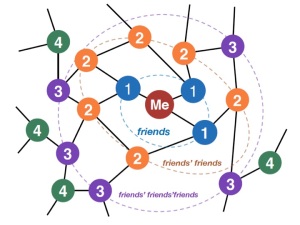
“Your network is bigger than you think”. A study conducted by Stanley Milgram and Duncan Watts introduces a concept of three degrees of separation (or influence) – individuals connected to you via no more than three intermediaries may provide a professional opportunity resulting from the presence of trust (Catarina, 2014).

Slide1_0

(Catarina, 2014)

Assuming you have 50 friends, they have 30 friends and these 30 friends have 10 friends each. This boils down to 15,000 potential professional connections if you are able to market yourself well! That being the case, think about people whom you have worked with in real life. Connecting with them on professional networking accounts such as LinkedIn increases the chance of expanding network as you may discover new communities through these people whom you have worked with (or vice versa). Hereby, authentic online professional profile may be derived from the amalgamation of your present offline relationships and online.

(LinkedIn, 2015)

As James O’ Reilly mentioned, “Authenticity is critical online.” Tell the story of yours across different social media platforms. On LinkedIn, relevant information detailing your qualifications, goals and experiences should be included as a part of your compelling brand. Snippets of past projects in multimedia form may enhance your online profile with persuasiveness and at the same time, recommendations from past superiors or colleagues will also create new buy-ins.

Do not simply just set up an LinkedIn profile and wait for people to discover. Simply put it is more than a career opportunity; but also a platform in creating and sharing ideas with individuals of common interests and goals. Therefore, individuals can participate actively in discussion groups and upload industry-related content that keep others in loop (e.g. Social Media Marketing)

1157986

(Hary, 2014)

While professional networking accounts are used in spotting talents, social media accounts of an individual are increasingly reviewed by HR personnel before making a hiring decision (Jobvite, 2015). Hence, we see the need in ensuring that the content does not display the ugly side of our social life, but rather the skills and potential contributions we may bring to the company. Displaying commitment in our hobbies may tell an individual’s passion and probably the values he holds. For instance, an individual posting his recipes creations on his blog regularly may indicate his discipline and creativity in a light-hearted manner that differentiates him from the others (TheEmployable, 2014). And these values could possibly reflect future positive work performance. Thus, social accounts play a part in shaping professional online profile. And an individual may even link his LinkedIn account to his social media accounts, while adjusting privacy settings accordingly – keeping private life to his social circle.

The influence of one’s online professional profile is not only measured by its content but also the constant effort in connecting with others. Also, we see the importance of the validity of every information being upload – Former Yahoo CEO Scott Thompson was forced to resign because of his fake qualifications on LinkedIn.

References

Catarina, A. (2014). 3 degrees of influence. [image] Available at: http://www.science20.com/catarina_amorim/we_might_have_no_free_will_but_at_least_we_are_influencing_half_of_the_world-130626 [Accessed 5 Nov. 2015].

Hary, V. (2014). The Role of Social media in Professional Development: A Job-seeker’s Perspective. [image] Available at: https://www.linkedin.com/pulse/20140918074208-255445305-the-role-of-social-media-in-professional-development-a-job-seeker-s-perspective [Accessed 5 Nov. 2015].

Jobvite, (2015). 2014 Social Recruiting Survey. [online] Available at: https://www.jobvite.com/wp-content/uploads/2014/10/Jobvite_SocialRecruiting_Survey2014.pdf [Accessed 5 Nov. 2015].

LinkedIn, (2015). LinkedIn Power Profiles 2015 – James O’Reilly, Verse Wealth, Australia. Available at: https://www.youtube.com/watch?v=l9QQTgI8230 [Accessed 5 Nov. 2015].

TheEmployable, (2014). How blogging can help you get a job. [online] Available at: http://www.theemployable.com/index.php/2014/10/28/blogging-can-help-get-job/ [Accessed 5 Nov. 2015].

Between Authenticity and Privacy (Topic 2)

 (HightonBros, 2014)

Although the virtual space exposes us to new information from the other end of the world, what we see is only what others reveal. Shannon mentioned that often people assume who she is based on the photos she posted on Instagram. That may not reflect her true offline identity because either most of us make assumptions based on what we see online or that is just a partial part of her overall offline identity. Therefore, it is within the bounds of possibility of having numerous online identities and not going against the issue of authenticity. In fact, different facets displayed online better represents the offline identity of an individual.

The underpinning of multiple online identities is the careful management and practice. The common issue faced is more of impression management rather than displaying authenticity. Because to a certain extent, we control what information goes online and that is dependent on our motivations (e.g. Shannon mention on introverts – they wanted and able to express the side of them which they do not do it offline).

Nevertheless, we see the concerns of privacy as Amanda described the vulnerability of the virtual space in her blog. Every activity we engage online is traceable and any information we upload may remain despite deleting it. Therefore, multiple online identities indicate the increase in exposure against possible online threats and exploitation.

coca-cola_brands

(Patricia, 2012)

Amanda highlighted the benefits that business can have for multiple online identities. I was able to relate it – how Coca-Cola and Minute-maid are different products but belong to the same company. And we see the intentions of marketing them as separate brands (instead as the company brand) because it is able to attract the intended types of customers. Same goes for an individual, a separate professional identity is able to create a brand that showcase his work achievements and not relating it to his social life.

Hence we can defer that the cons of multiple online identities can be managed with what we post online and understanding the potential messages it might bring across.

340 Words

Reference

HightonBros, (2014). What’s on your mind?. Available at: https://www.youtube.com/watch?v=QxVZYiJKl1Y [Accessed 4 Nov. 2015].

Patricia, S. (2012). [image] Available at: http://fortune.com/2012/05/10/muhtar-kents-new-coke/ [Accessed 4 Nov. 2015].

Thoughts on Others’ Views

Screenshot 2015-11-04 21.54.27

Online Identity: How many? One, Two, Three???

Screenshot 2015-11-04 22.27.44

Topic 2: Managing Multiple Online Identities

The more the merrier?

The proliferation of social media technology has driven the digital space towards an emergence of new landscape. Beyond a consumer-targeted space, we see the opportunities for individuals to create online identities and socialize behind their computers. One may also create multiple identities such as using fake or anonymous names. And these multiple identities exist online as an individual’s persona even if an individual goes offline.

Screenshot 2015-11-03 23.45.35Screenshot 2015-11-03 23.45.53

Undeniably, multiple online identities challenge the effective management. Although it possesses potential to reach out to a wider audience, the unstandardized image or identity may harm the reputation and credibility of the business. Canon UK is an example that illustrates the failure of online identities on Twitter and Facebook (but a growing success on Instagram), taking the social responses in consideration. Therefore, it raises the question that perhaps multiple online identities are not efficient in lasting social ramifications.

Mark Zuckerberg, the founder of Facebook, believes that the social network’s success is attributed to the authenticity in displaying the offline life of an individual. In other words, “you are online whom you are offline” – there is only one identity. Hereby, Facebook’s philosophy reflects the argument against for having more than one online identity and an individual is not encouraged to create multiple, anonymous or pseudonymous account for any purpose. Profiles are registered with the real names of an individual and connections are mutually verified. The “Facebook Connect” service has also mirrored its belief with the tying back to the single identity on Facebook.

Having said that, Chris Pole argues that individuals are akin to diamonds that look different depending on the angle. Goffman’s theory supports his statement; and managing online identities is more of a practice rather than the representation of an authentic static identity. Depending on the context, individuals may exhibit different behaviour online and that does not equalize to an unauthentic identity.

fbln

(Yu, 2013)

Therefore, multiple online identities may open up new possibilities. For instance, the identities may better engage targeted audience with niche content. Usage of a pseudonymous name (an additional online identity) may minimise the curb of social factors and for an individual, perhaps this is also a solution in increasing various types of work being recognized by community of similar interests. Separate professional and social identity may put an individual in a better position of highlighting his achievements and experiences instead of social life. Linkedin accounts are often owned by many individuals for potential job opportunities while keeping their personal views on other accounts such as Facebook.

In conclusion, I believe that the benefits of multiple online identities outweigh the drawbacks and hence supports the statement. Manage your multiple online identities wisely and many opportunities will knock on your door.

444 Words

References

Cassidy, S., Carolyn, H., Timothy, B. and Jeffrey, P. (2015). Anonymity, pseudonymity, and the agency of online identity: Examining the social practices of r/Gonewild. First Monday, 20(3).

Megan, C. (2015). Multiple Personalities And Social Media: The Many Faces of Me. [online] Forbes.com. Available at: http://www.forbes.com/sites/meghancasserly/2011/01/26/multiple-personalities-and-social-media-the-many-faces-of-me/ [Accessed 3 Nov. 2015].

Yu, D. (2013). LinkedIn Newsfeed Ads vs Facebook Newsfeed Ads- we compared results! – BlitzMetrics. [online] BlitzMetrics. Available at: https://blitzmetrics.com/linkedin-newsfeed-ads-vs-facebook-newsfeed-ads-we-compared-results/ [Accessed 3 Nov. 2015].

It’s all about management (Topic 1)

A witty friend of mine lamented that no individual can escape from the claws of digital technology – data is recorded onto the digital space once you are born! There he went and he felt that the new technological era of technology has invaded everyone’s privacy. Indeed, everyone does have a choice in deciding to be either a Digital Resident or Visitor. Browsing through the blogs of my various colleagues, I see the concurrence that there are no such best modes between the both. But rather, there is room for discussion of the different motivators behind every individual’s choice.

Given the rise in globalization and the time where most of our friends are not in town (either studying overseas or globetrotting), it is unequivocal that many of us will have displayed traces of presences online. It is probably the most efficient and timely form of communication – sharing your favourite music playlist, playing games and seeing “face-to-face”. Having said that, most of us were considered Residents at a point of time (such as at the present, blogging and exchanging views).

Of course, it is definitely understandable that why we can be Visitors too. The perks of technology come with implications as more is concerned with issues such as privacy and security. Social media applications such as Snapchat is seen increasingly popular over others (e.g. Facebook) because of its unique features that minimize these concerns.

Overall, I think that the two modes are relevant in managing our online presence. The enormous online community is a potential source of information and platform to exchange views. While being careful with what is published, an individual can certainly reap the benefits of “residing online”. What Stephanie had brought up (under the comments) has prompted me for further thinking. I think that Residents do have strong online presence but that does not equalize to a positive presence. Hence, it is far more essential to decide which information of yours should be published and which it is not. For instance, one should not make personal hasty comments about races or religions. In that sense, an individual can be a Resident-Visitor placed between the two modes.

Thoughts on Others’ Views

https://stephanielymblog.wordpress.com/2015/10/30/topic-1-digital-nativesvisitors-and-digital-immigrantsresidents/

Topic 1: Digital Visitors and Digital Residents